
The most complete piano musical foundation you can build.

Classical & contemporary
Global exam pathway available
All ages & levels
In-person & online
Free Trial Lesson

Try a piano class free

Our team will call you within 24 hours to confirm your slot.

or reach us directly

+91 70210 05426     info@mindraga.in

Teacher’s experience

10+ years

Teaching

1000+

Students Taught

8000+

Hours of Teaching

Piano Styles

Classical rigour.
Contemporary joy.

Our piano curriculum blends classical technique with the music students actually want to play giving them the best of both worlds.
Classical Piano

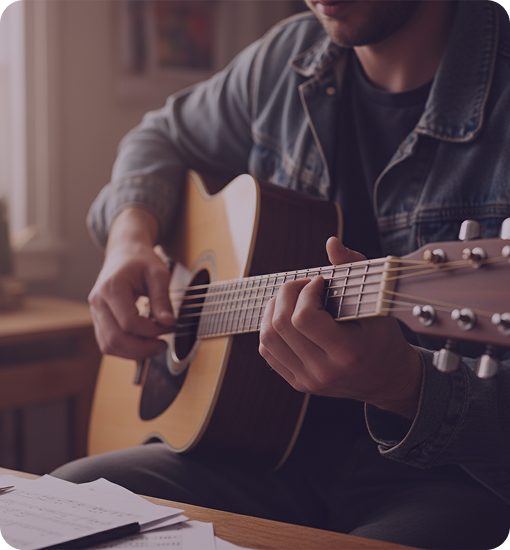
Classical Piano

Technique · Notation · Examination

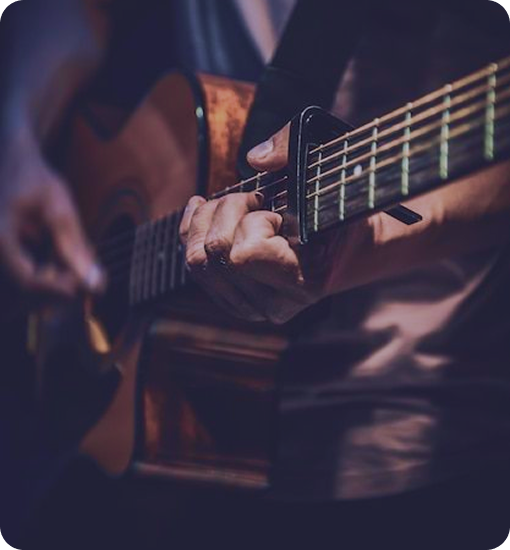
The foundation of all piano education. Classical training builds proper hand technique, advanced sight-reading, and the musical depth that separates technically sound pianists from truly expressive ones.
  • Proper hand position and touch technique
  • Grand staff notation — treble and bass clef
  • Scales, arpeggios, and technical exercises
  • Repertoire: Beethoven, Bach, Chopin, Mozart
  • Sight-reading and aural training
Contemporary Piano

Contemporary Piano

Pop · Film Score · Jazz Harmony

Play the music you actually love. Contemporary piano covers chord-based playing, pop accompaniment, film score repertoire, and the harmonic concepts behind modern music. Built on classical technique, but applied to the songs that move you today.

  • Chord voicings and pop accompaniment patterns
  • Lead sheets and chord charts
  • Film score and cinematic piano
  • Jazz harmony and extended chords
  • Improvisation over chord progressions
  • Arrangement of contemporary songs
Piano Learning Levels

A program built for every level

From first-time learners discovering the piano to serious students preparing for stage, exams, composition, and performance each level gets a curriculum designed specifically for the student’s current skill, pace, and musical goals.

Year 1 • Foundation & Beginner

First beats,
real music.

Year 1 builds the student’s core piano foundation. Students begin with posture, finger numbers, keyboard geography, simple rhythms, and familiar melodies, then gradually move into two-hand coordination, basic chords, notation reading, and complete pieces.

  • Keyboard layout, finger numbers, and correct posture
  • Basic notes, rhythm, and simple melodies
  • Right-hand and left-hand coordination
  • Basic chords: C, F, G, Am
  • First complete pieces and term-end performance
Term-by-Term Progress
T1

Foundation — First Keys

Keyboard layout, finger numbers, posture, basic notes, simple rhythm, and first melody.

T2

Beginner — Melody & Rhythm

Right-hand melodies, basic rhythm reading, left-hand single notes, and 2–3 simple pieces.

T3

Beginner — Chords & Coordination

Basic chords, two-hand coordination, simple accompaniment patterns, and more repertoire.

T4

Beginner — Piece Builder

4–5 pieces across styles, basic notation reading, simple dynamics, and first confident performance.

Year 2 • Early Intermediate & Intermediate

From piano player
to musician.

Year 2 helps students move beyond basic piano playing. They begin reading music more fluently, playing with both hands independently, understanding scales and chords, and performing complete pieces with better timing, expression, and confidence.

  • Treble and bass clef reading
  • Major scales and basic chord progressions
  • Two-hand independence and coordination
  • Broken chords, arpeggios, and accompaniment patterns
  • Ensemble playing and global exam preparation pathway
Term-by-Term Progress
T1

Early Intermediate — Notes & Reading

Treble clef reading, bass clef introduction, simple two-hand pieces, and rhythm exercises.

T2

Early Intermediate — Scales & Chords

Major scales, chord progressions, broken chords, and simple accompaniment patterns.

T3

Intermediate — Two-Hand Playing

Left-hand patterns, right-hand melody control, dynamics, articulation, and genre-based pieces.

T4

Intermediate — Ensemble & Performance

Playing with other musicians, performance-ready pieces, stage confidence, and exam-oriented preparation.

Year 3 • Advanced

Performance, expression,
and mastery.

Year 3 is for students who are ready to become confident piano performers. The focus shifts to advanced technique, expressive playing, stronger sight-reading, harmony, improvisation, interpretation, and preparation for global exams or stage performances.

  • Advanced scales, arpeggios, and technical exercises
  • Chord inversions and stronger harmony understanding
  • Sight-reading and aural training
  • Pedal control, phrasing, dynamics, and expression
  • Trinity / global exam preparation and recital readiness
Term-by-Term Progress
T1

Advanced — Technique & Touch

Advanced finger exercises, scales, arpeggios, hand control, tone, and dynamic playing.

T2

Advanced — Harmony & Expression

Chord inversions, progressions, phrasing, pedal use, expressive playing, and musical interpretation.

T3

Advanced — Performance Repertoire

Advanced classical and contemporary pieces, arrangement work, and stage preparation.

T4

Advanced — Stage & Exam Ready

Mock exams, sight-reading, aural practice, technical work, and annual recital performance.

Year 4 • Pro Player

From advanced pianist
to performing artist.

Year 4 is designed for serious piano learners who are ready to move beyond structured lessons into artistry. The focus is on personal style, advanced performance, interpretation, composition, accompaniment, recording basics, and preparation for higher-level global exams or professional opportunities.

  • Advanced piano repertoire and stylistic playing
  • Interpretation, expression, and personal musical voice
  • Composition, arranging, and accompaniment design
  • Recording, MIDI, and basic music production concepts
  • Artist portfolio and advanced exam readiness
Term-by-Term Progress
T1

Pro Player — Advanced Repertoire

High-level piano pieces, advanced technical work, stylistic interpretation, tone, and expression.

T2

Pro Player — Style & Interpretation

Phrasing, dynamics, pedal control, genre study, and developing a personal piano sound.

T3

Pro Player — Composition & Recording

Original music ideas, arrangement, MIDI basics, recording concepts, and building a performance portfolio.

T4

Pro Player — Live Performance & Portfolio

Solo performance, ensemble collaboration, advanced exam preparation, and final showcase.
Student Stories

Hear it from the  students.

Mitali Ghelani

Homeroom Teacher

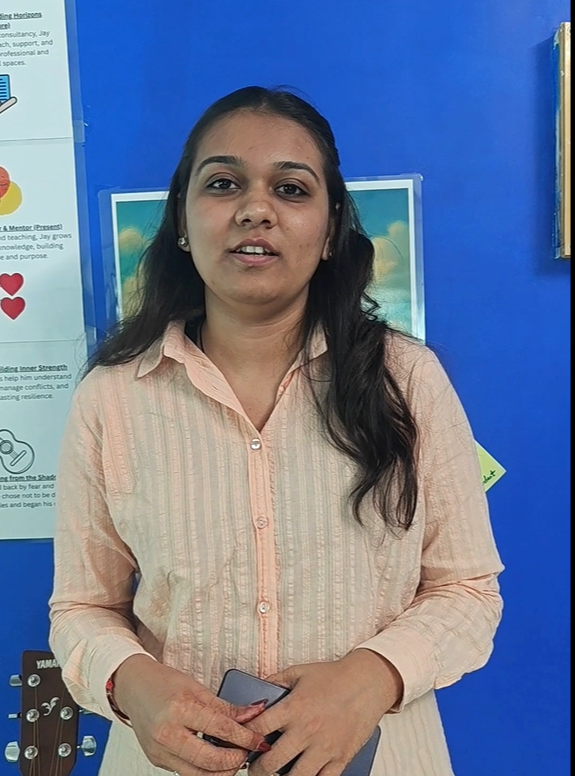
Learning music at Mindraga has been a great experience. The team is very professional but at the same time very approachable and supportive.I’m really impressed with the dedication of the Mindraga team. What I liked the most is the friendly and encouraging atmosphere they create during the sessions. It makes learning music feel exciting rather than stressful. A great place for anyone who wants to learn music seriously.

Amit Tiwari

Parent

Pranav Tambe

Homeroom Teacher

Learning to play keyboard at Mindraga Institute with experienced trainers Jay Talsania and Shakti has been fun and inspiring their personalized sessions helped me confidently play several songs within just a few weeks.

I highly recommend Mindraga to anyone looking to start or strengthen their musical journey in a positive and encouraging environment.

Aju Palleri

Parent

Vidhi Sheth

Homeroom Teacher

I have been learning music from MindRaga Music School for the past one month, and it has been a great experience. The curriculum is well-structured and easy to follow, and the teaching is very good. The instructors explain concepts clearly and make learning enjoyable. I can definitely recommend this to someone who wants to learn music.

Mrunal Shinde

Parent

Swapnil Kulkarni

Homeroom Teacher

Learning guitar at Mindraga has been amazing experience. Great teachers and a fun encouraging environment. Highly recommend!!

vidhi sheth

Parent

×
Common Questions

Everything about piano at MindRaga.

Do I need to own a piano or keyboard before starting?
No — for your demo class we have instruments at the centre. After enrolling, we'll advise on what to buy at home for practice. A decent 61-key keyboard with weighted keys is a practical starting point and very affordable. If you want to invest in an acoustic piano, we'll guide you on what to look for. You don't need to decide anything before your first class.
What's the difference between piano and keyboard classes at MindRaga? +
Piano classes focus specifically on acoustic piano technique — proper touch, classical and contemporary repertoire. Keyboard classes are broader — covering electronic keyboard styles, contemporary arrangements, chord playing, and the full range of keyboard sounds. If your goal is classical technique and exam certification, piano is the right choice. If you want a more contemporary, versatile approach, keyboard is a great fit. We'll help you decide in your demo.
Am I too old to learn piano? +
No. We teach adult beginners regularly and they make extraordinary progress. Adults often learn faster than children in the early stages because they understand the logic of music theory immediately. The main requirement is consistent practice — 20–30 minutes daily makes a significant difference. Many of our most motivated and fastest-progressing students are adults learning for the first time.
How long before I can play a recognisable piece? +
Most students are playing simple melodies with both hands within 6–8 weeks. A complete recognisable piece — hands together, musical — typically by the end of the first term (12 weeks). The pace depends on age and practice consistency, but our curriculum is built so that every student has something genuinely musical to play from the very first month.
Can piano be taught effectively online? +
Yes — with some considerations. Online piano works very well for intermediate and advanced students, and adequately for beginners. The main limitation is that subtle touch and dynamics are slightly harder to demonstrate remotely. Our online piano faculty are experienced in teaching remotely and use specific camera angles and demonstration techniques to compensate. Many students do a mix of in-person and online successfully.